01020304
Live production trace
01 / 04Observe

Real signals enter the system

Signals move through quality and risk gates before release. Monitoring sends evidence back to the next iteration.

Applied AI Scientist at Inception · Abu Dhabi

Applied AI, builtto survive contactwith production.

I'm Pranav Arora. I develop, evaluate and deploy AI systems—connecting scientific experiments to the engineering required for reliable use.

Explore selected work
Singapore → Abu DhabiScroll to selected workModels · evaluation · production

Things I built to understand where AI becomes useful—and where it breaks.

Three personal projects, explained without pretending they are larger or more proven than they are.

What I built

Risk-Controlled AI Trading Agent

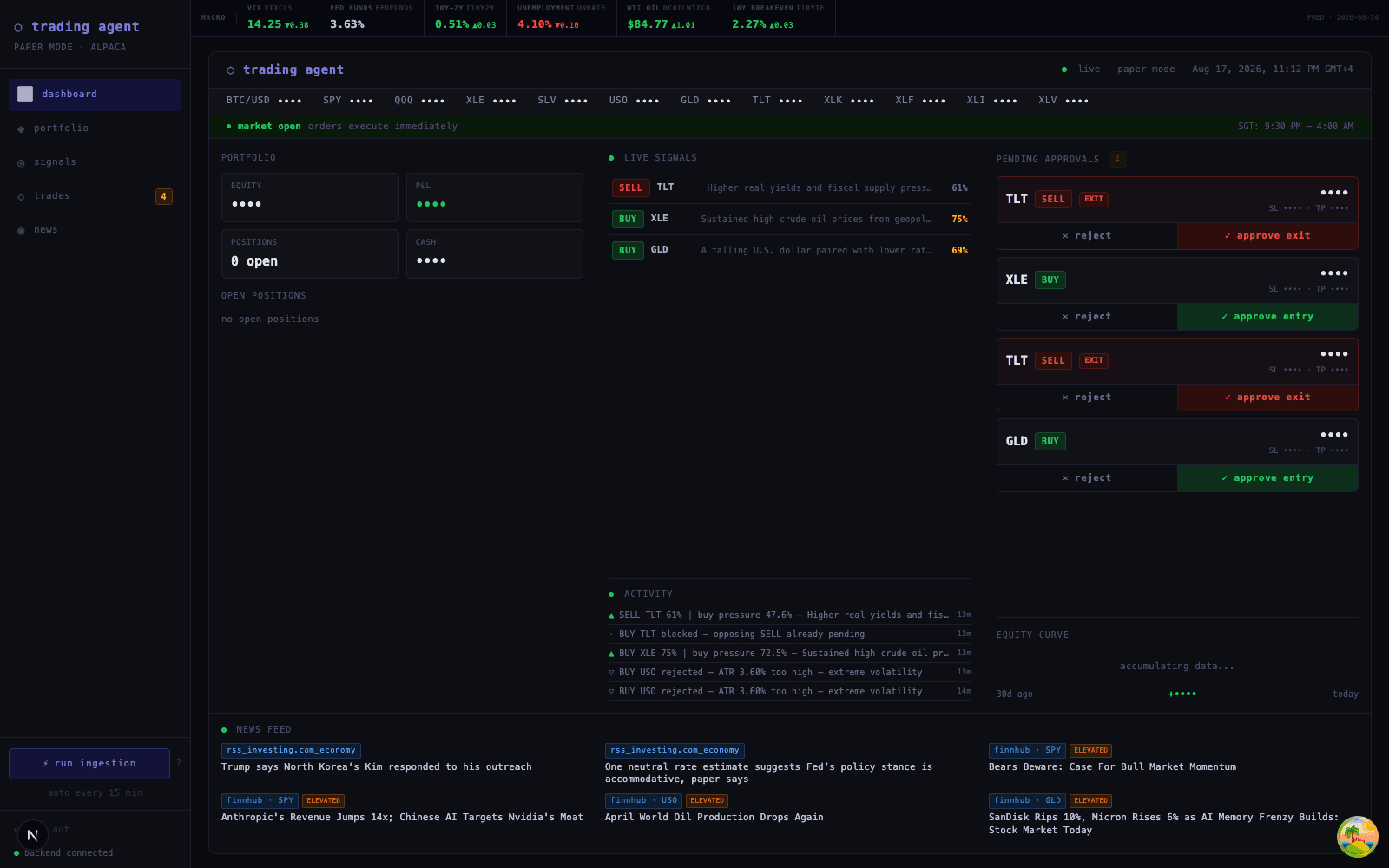
A full-stack system that reads financial news, checks whether it may affect the market, confirms the signal with technical indicators, and prepares a paper trade for human approval. Every decision and trade is recorded so the process can be reviewed.

Read the source

What the repository shows

15 minnews cycle
5 minposition checks
10%single-trade cap

News is collected every 15 minutes and queued in Redis.

01Financial news
02AI signal
03Technical checks
04Human approval

Saved results

These images are committed with the project, so the evidence remains visible even when no demo is hosted.

Why I built it this way

01

Keep a person in control

The system prepares a trade, but a person must approve it before it reaches the paper account.

02

Do not trust news alone

A signal must also pass technical checks, and the combined confidence must reach 55%.

03

Limit damage before chasing returns

Each trade is capped at 10% of equity, total exposure at 50%, with a 400 USD kill switch.

What I would improve next

Add repeatable backtests and a paper-trading report before making any claim about signal quality or returns.

From optimising factories in Singapore to building applied AI in Abu Dhabi.

I started in analytics at Dentsu, moved closer to real-world operations at Micron, and then built enterprise AI systems at Hewlett Packard Enterprise.

Today I'm an Applied AI Scientist at Inception, a G42 company. That path changed what I care about: not only whether a model can work, but whether a team can understand it, evaluate it and trust it when the stakes are real.

The move from Singapore to Abu Dhabi was also a personal reset—a chance to work on ambitious AI problems while carrying forward the production discipline I learned in manufacturing and enterprise software.

6+years in data and AI
$10Mannual impact from RL scheduling
5K+enterprise users served
85%text-to-SQL accuracy

The work between a promising model and a dependable system.

This is the part of applied AI I care about most—six stages I move through on every project, in roughly this order.

01

Frame

Define the decision

Turn an ambiguous AI request into users, constraints, failure modes and a measurable definition of success.

Working output
System brief + risk map
Evidence I watch
Success criteria
02

Build

Make behaviour visible

Create the smallest traceable model or agent workflow that can expose assumptions before the architecture hardens.

Working output
Traceable baseline
Evidence I watch
Execution traces
03

Evaluate

Test what matters

Measure task quality, grounding and robustness against representative scenarios—not only a polished happy path.

Working output
Evaluation report
Evidence I watch
Quality thresholds
04

Guard

Design safe failure

Add permissions, validation, fallbacks and human escalation where model uncertainty meets operational risk.

Working output
Safety contract
Evidence I watch
Failure coverage
05

Deploy

Engineer the service

Package inference and orchestration behind observable APIs with repeatable release and rollback paths.

Working output
Release candidate
Evidence I watch
Latency + reliability
06

Operate

Close the loop

Watch quality, cost, drift and incidents in production, then feed real behaviour into the next evaluation cycle.

Working output
Production signal
Evidence I watch
Cost + drift

Where I've done the work.

Applied AI, enterprise software and machine learning inside systems where reliability and measurable outcomes matter.

01

Inception · a G42 company

Applied AI Scientist

Jul 2026 – PresentAbu Dhabi, UAE
  • Building applied AI systems from Abu Dhabi for high-impact, real-world use cases
  • Focused on agentic architectures, evaluation, reliability and production delivery
02

Hewlett Packard Enterprise

Senior ML Engineer

Aug 2024 – CompletedSingapore
  • Text-to-SQL platform — 85% accuracy, 2,000+ queries/week across 7 business units
  • K8s Watcher agentic system — 70% MTTR reduction, 50+ incidents/week
  • Document Planning Hub — LangGraph multi-agent, 5,000+ users, 80% error reduction
  • OneAI platform standards across 8 teams — deployment failures down 60%
03

Micron Technology

Data Scientist

Jan 2022 – Aug 2024Singapore
  • PPO RL wafer scheduling — $10M annual revenue impact, 0.5% production increase
  • Predictive maintenance pipeline — 30% downtime reduction across 70-machine cluster
  • LLM fine-tuned on 10K internal docs — 80% first-contact resolution, BLEU 0.82
04

Dentsu International

Data Scientist

Aug 2020 – Jan 2022Singapore
  • ROAS prediction models — 50% faster post-campaign analysis, 20% cost reduction
  • Customer propensity model — 85% validation accuracy, deployed to live campaigns
  • Data catalog on Azure AKS — ingesting 10,000+ datasets for enterprise governance

The stack changes. The standard doesn't.

I choose tools around the problem, the team and the operating constraints—not because they are fashionable.

01

Applied AI

Agentic systems, RAG, fine-tuning, tool use and prompt design

02

Evaluation

LLM-as-judge, retrieval quality, MLflow and experiment design

03

Engineering

Python, FastAPI, PostgreSQL, Redis, Docker and Kubernetes

04

Platforms

Azure, GCP, AWS, Qdrant, KServe and production monitoring

What building these systems changed my mind about.

01

RAG evaluation

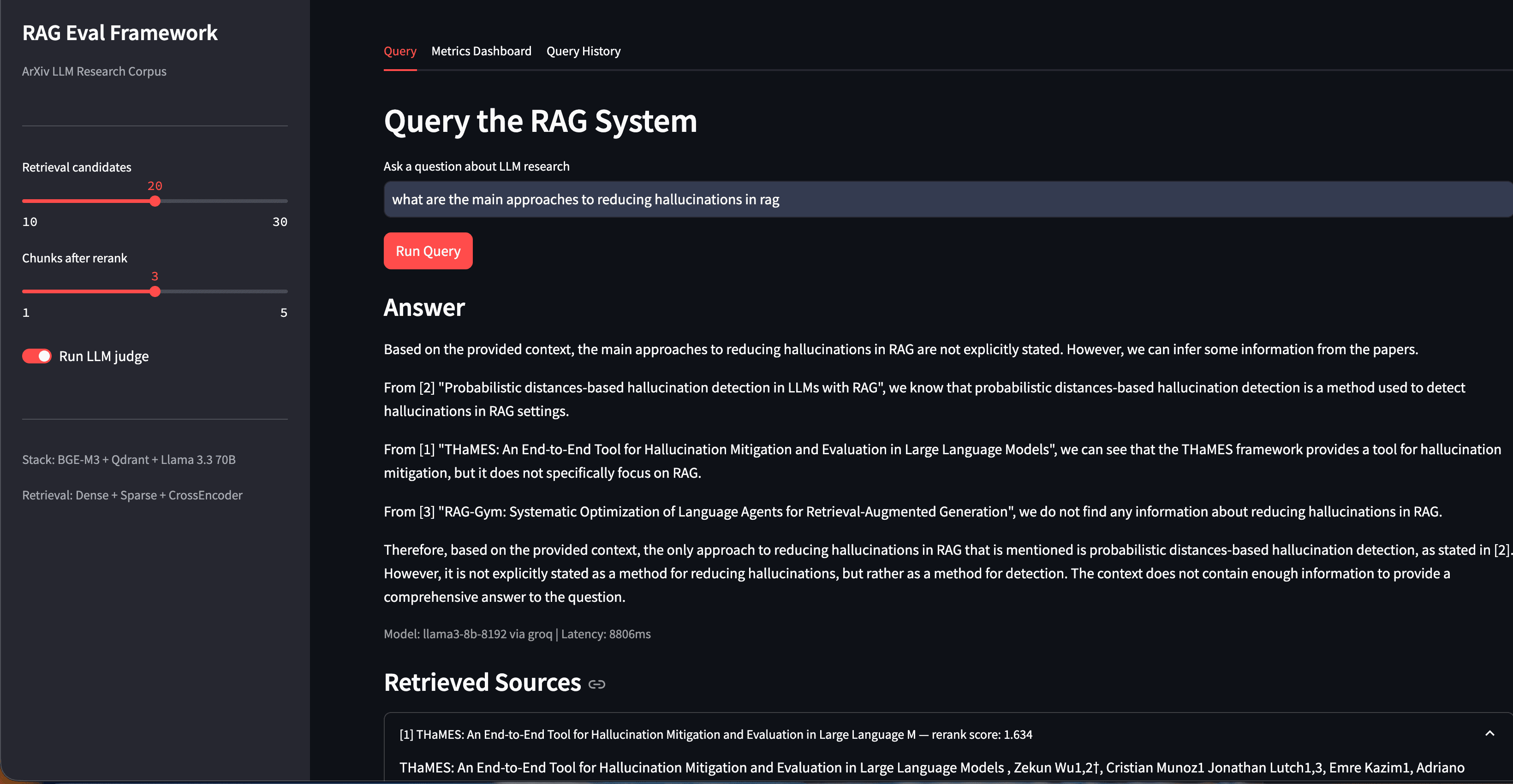
A demo shows what can happen. An evaluation shows how often.

That is why I keep retrieval evidence, response time and answer-quality results visible instead of hiding them behind one polished query.

02

Trading agent

Risk controls belong inside the product, not in the footnotes.

Human approval, exposure limits and a kill switch are part of the system behaviour—not cleanup added after the model is connected.

03

QLoRA fine-tuning

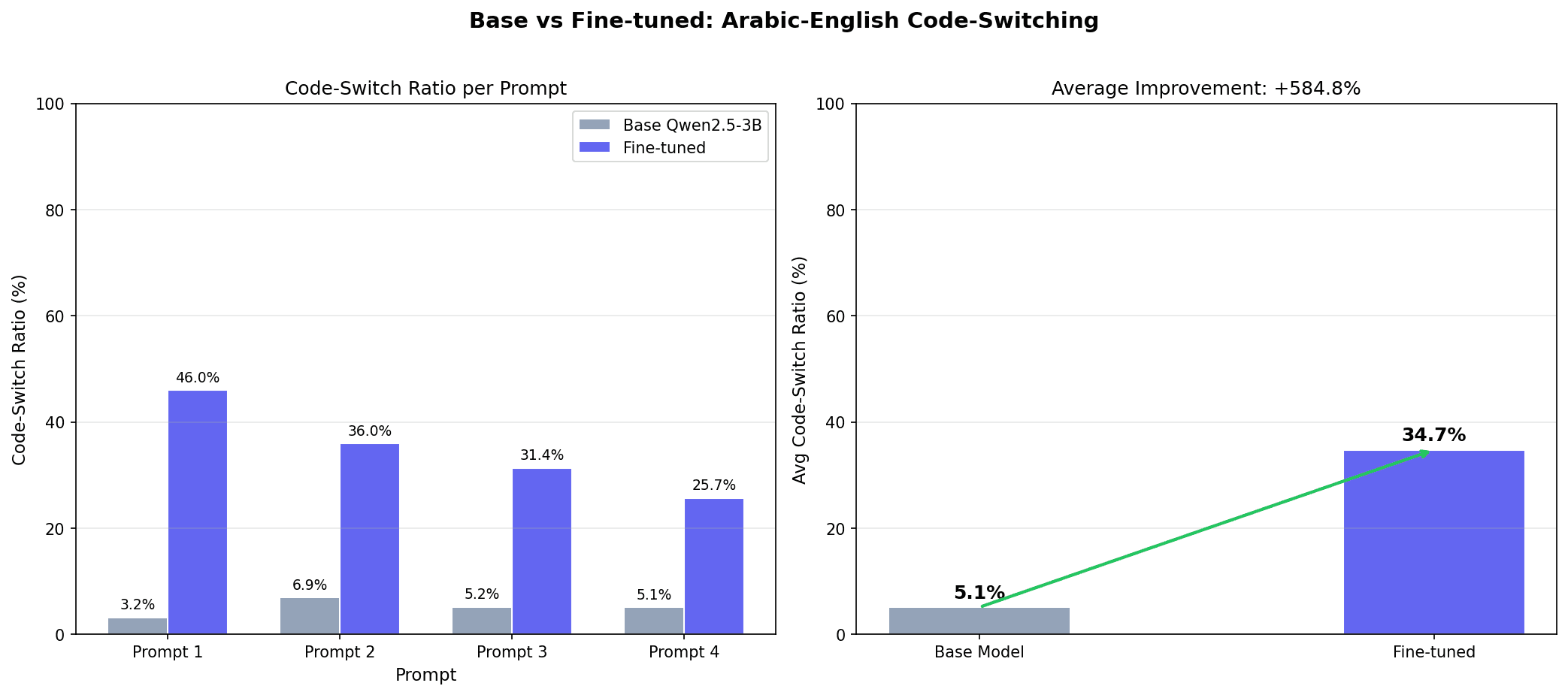
Small experiments need clearer comparisons, not larger claims.

A stored base-versus-tuned comparison is more useful than a vague quality claim, and it makes the next evaluation gap obvious.

Have something worth thinking through?

I'm always open to a thoughtful conversation about applied AI, reliable systems or difficult engineering problems.

pranav2vis@gmail.com ↗