What I built
The approach
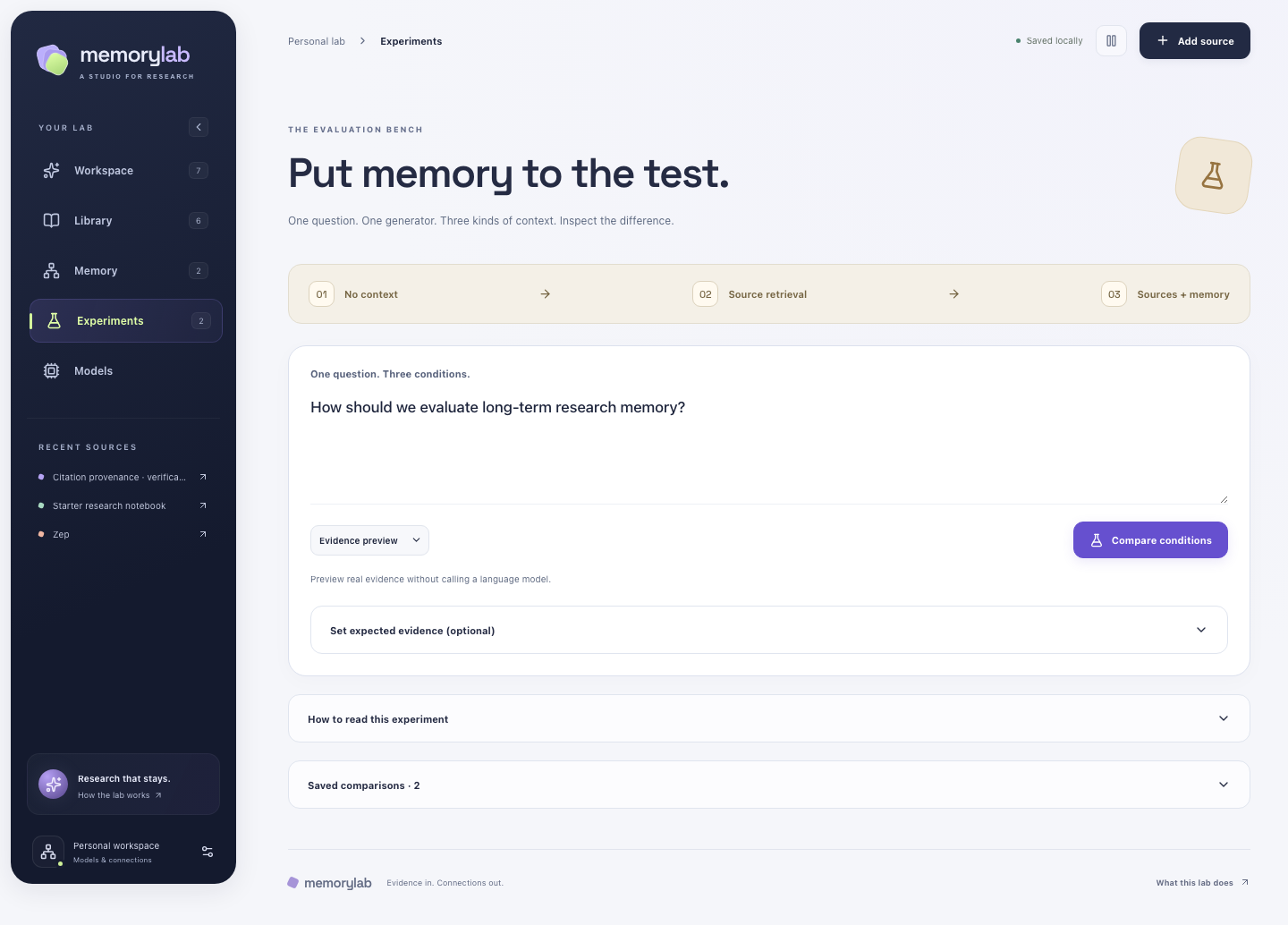
Import papers and notes, ask questions over them with citations, turn sources into study material, record a human verdict on each claim, and keep versioned findings in a graph memory. An experiment bench compares answers with no context, source retrieval, and retrieval plus memory.
How the comparison is set up
The experiment bench measures whether researcher-selected sources were retrieved, not whether answers are correct. A held-out question set with citation-support labels and repeated trials is still needed before claiming memory improves answers.
Follow the workflow
PDFs, notes and dated web snapshots are imported explicitly, keeping page references.
More from the project
Select an image to inspect it at full size.
Engineering decisions
Combine keyword and meaning search
SQLite FTS5 and local embeddings are ranked separately and merged with reciprocal rank fusion.
A person decides what is remembered
Only a claim whose latest human verdict is "supported" can become a finding, and revised findings keep their earlier versions.
Make the comparison fair
Both retrieval conditions get the same snippet budget, and exports keep context, prompt and model hashes so a run can be inspected later.
Limitations & next steps
Build a labelled question set, run repeated and counterbalanced trials, and report whether memory improves citation support rather than only retrieval.